

Mayor Mamdani campaigned on a promise of an affordable New York City. His latest move to make good on it is the PIT Crew: 30 technologists tasked with rapidly building digital solutions to public problems.
An influx of digital talent is a blessing for state capacity. Not every problem has a tech solution, but in many cases a well-built website, software tool, or data platform makes a solution far more tractable. There is a reason the nation’s first Click to Cancel protections shipped with a PIT crew tasked with implementing them.
But if we want to see these efforts be successful, the Mayor’s office should go further and fully embrace responsible and trustworthy use of AI across city government. By doing so, it will ensure it can meaningfully deliver on campaign promises: access to cheaper groceries, building more affordable housing, and making it easier to build a thriving small business in New York.
Trust & Capacity Building
Getting this technology right is central to rebuilding public trust, which now sits near the lowest levels on record (just 17% of Americans say they trust the government to do what is right). That’s the bet the mayor is making: if you deliver services for people, they’ll trust you.
New Yorkers reach that judgment through the local transactions that either work or don’t: renewing a permit, enrolling a kid, getting a benefit they qualify for, reaching a caseworker before a deadline. But to rebuild this trust at scale, it’s going to take a whole lot of government effort, and 30 technologists can’t fix how a 300,000-person workforce serves the city. To do that, the government has to work smarter, not just harder.
The tools to work smarter finally exist. Government runs on unstructured text: applications, licenses, benefit rules, bookkeeping, inspection records. That is exactly the work AI made cheap almost overnight. At a two-hour hackathon we ran last month, teams built working prototypes that agencies had in some cases spent years developing. For the first time in a while, maybe since the invention of the internet, the gap to build is as small for an agency as it is for a business.
If the city government wants to take full advantage of this shift, it should act quickly and at scale. That means making it easy to solve many of the mayor’s top priorities with this technology. It also means equipping more people in public service with AI subscriptions and the training to build live solutions themselves (at the time of writing, many of the city’s agencies still have no work-approved LLM tools, including for coding and development).
It is precisely because AI is powerful that the government should be proactive about its equitable, fair, and just use. Avoiding the conversation risks repeating old patterns where agencies get locked into private vendors and end up renting systems they cannot change. Real change happens the other way: by putting the technology in the hands of practitioners and letting them deliver.
Enough Talk – 3 prototypes of AI workflows for Mayoral Priorities
We would rather show than tell. What follows are prototypes built in hours, each for a few dollars in token spend, against three of the mayor’s stated priorities. Many more could easily follow.
Making Groceries Cheaper
Food is one of the fastest-rising costs for working New Yorkers, and it hits hardest in the neighborhoods with the fewest options. Mayor Mamdani’s pilot of city-owned grocery stores is meant to bring down prices. But where to position the five stores? How to define what ‘cheap groceries’ means? How to publicize outcomes and hold vendors to account?
We identified disadvantaged census tracts suffering from food insecurity with transit connectivity and used public data sets to build an interactive dashboard.

Expanding Ownership And Making Small Business Easier
Worker cooperatives and small businesses build stable, local wealth while offering real worker say. But they are hard to start and run. How can the Mayor lessen upfront costs associated with incorporating a business? What tools might help with navigating licenses, inspections, and fines across dozens of agencies?
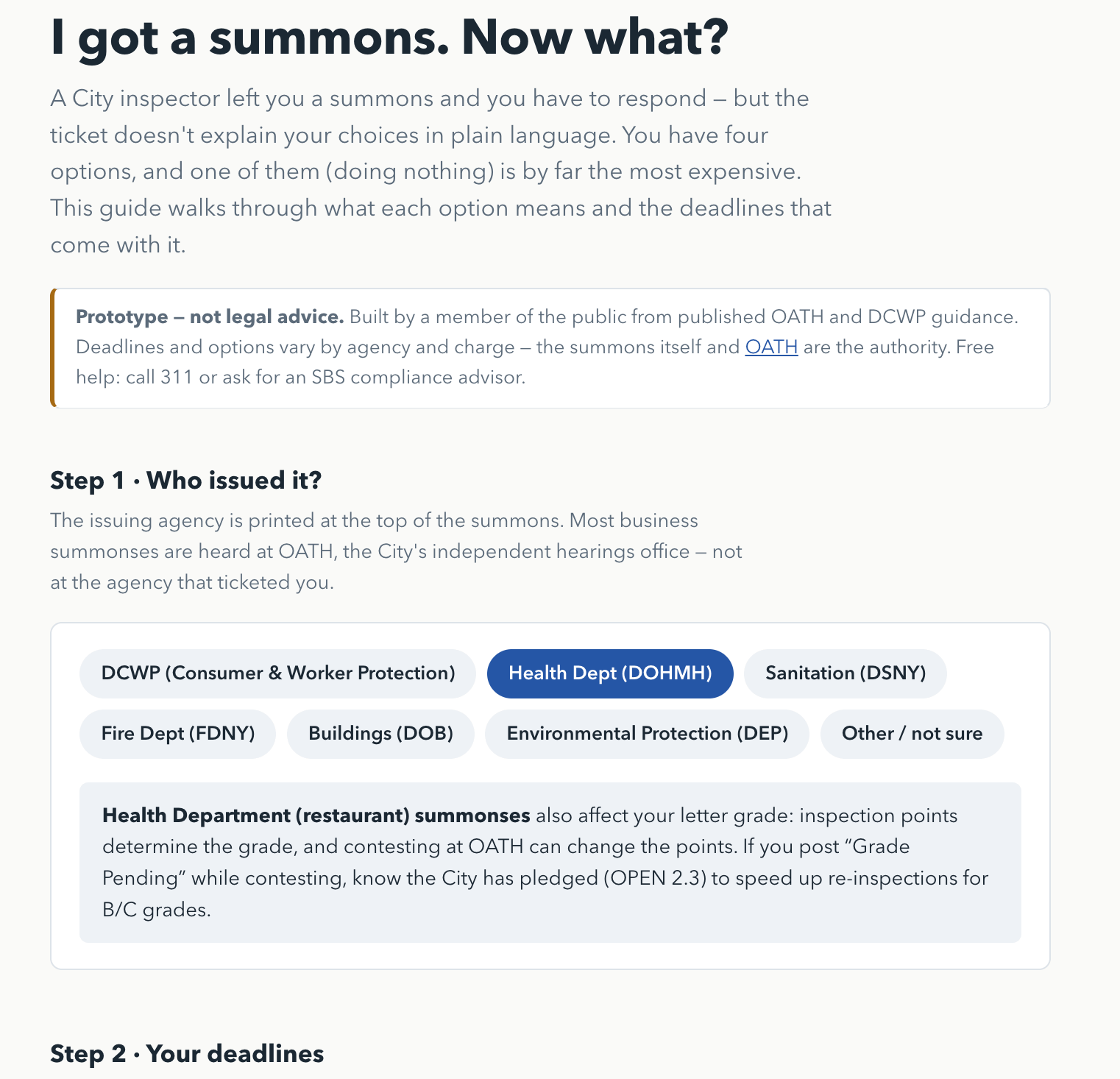
We aggregated city regulations and built a simple guide for cooperatives and businesses on what to do after receiving a summons, addressing an issue mentioned in the Mayor’s OPEN for Small Business plan.
Building affordable homes
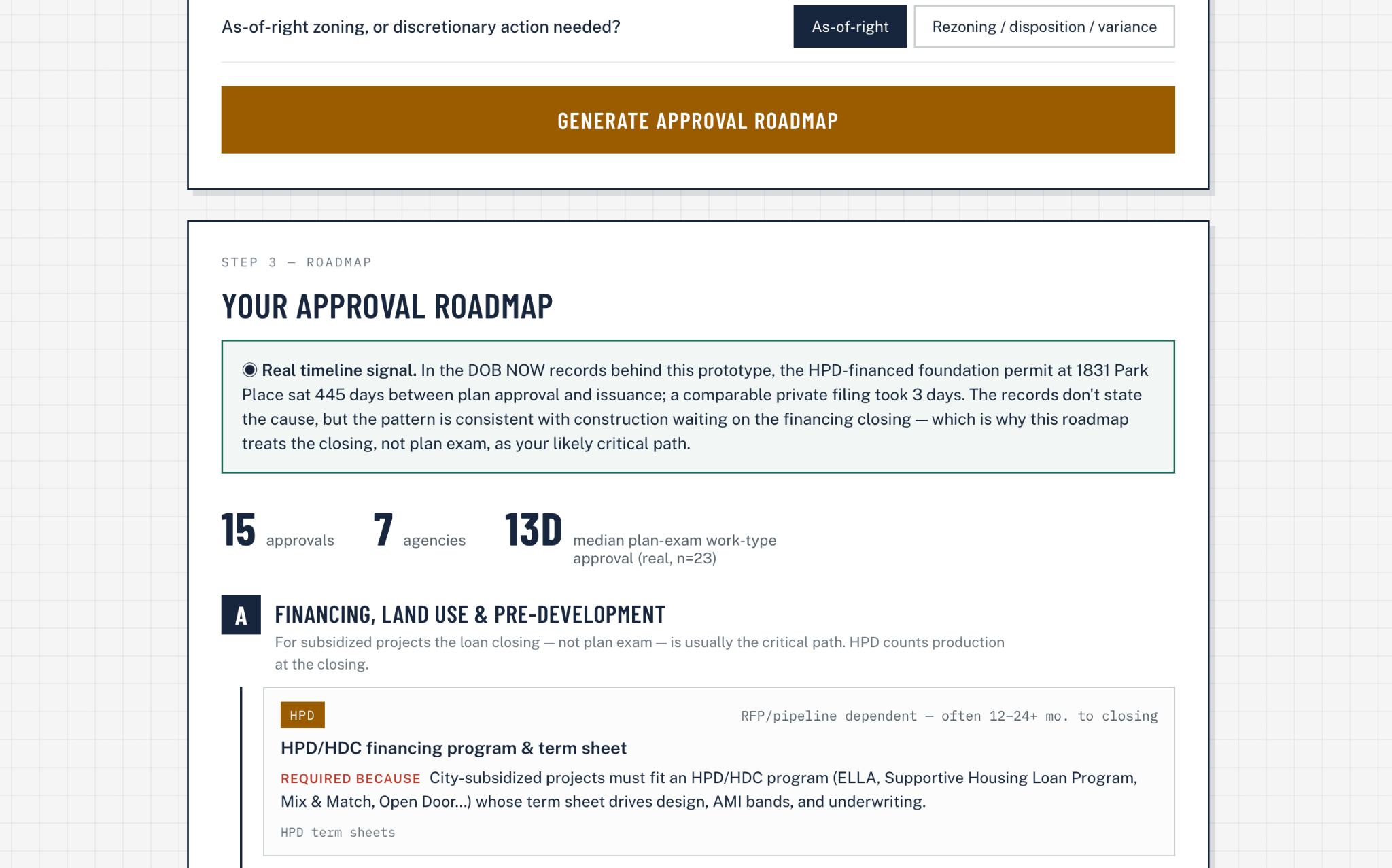
Mayor Mamdani is aiming for 200,000 new affordable homes to be built as part of his Block by Block plan. But builders currently have to navigate 40 approval processes across 18 offices and agencies, according to his COGE charter revision committee.
We used real public data and real-world examples of projects to build new homes and illustrated the pathway from idea to official approval based on characteristics of the buildings.
Takeaway
Mayor Mamdani has a rare opportunity to use public-interest AI to make our city more affordable. AI is already reshaping how people work. For those of us who want the government to truly serve the people, this inflection point is an opportunity: a chance to catch up where government has lagged and own how and where technology is used.
It is time to lean into all the amazing possibilities that AI unlocks and create our own vision for what good government means.
Are you a government practitioner who wants to use AI and technology to do your job more effectively and efficiently? A technologist who wants to dip your toe into the civic realm? An expert in government who thought our article was spot-on, completely off-base, or somewhere in the middle? Tell us more by filling out this short form!